


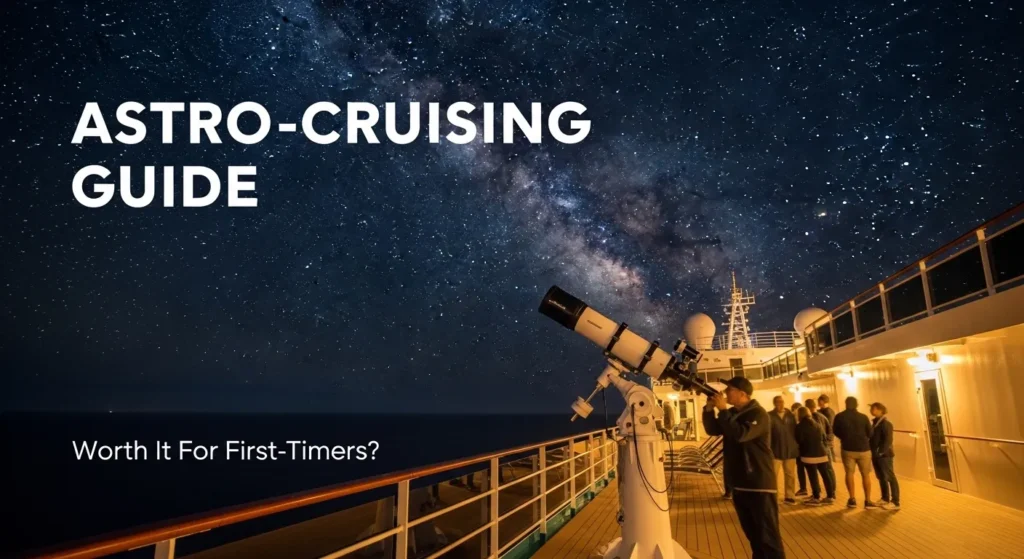
Astro-Cruising sounds like a dream — but dreams cost money. Before you book, know exactly what you’re getting into.
Here’s everything a first-timer needs to know.
Table of Contents
What Astro-Cruising Actually Means
Astro-cruising isn’t space travel. It’s ocean cruising specifically designed for astronomy enthusiasts. These specialized cruises sail to locations with minimal light pollution. They schedule routes around major celestial events—solar eclipses, meteor showers, planetary alignments. Onboard astronomers lead stargazing sessions, teach constellation identification, and explain what you’re observing through provided telescopes.
Think regular cruise ship amenities plus dedicated astronomy programming. Some cruise lines dedicate entire voyages to astronomy. Others offer astronomy-themed nights within regular itineraries. The experience varies significantly between these two approaches.
The appeal? Combining vacation relaxation with genuine astronomical observation under truly dark skies that most people never experience near cities.
Who Offers Astro-Cruises

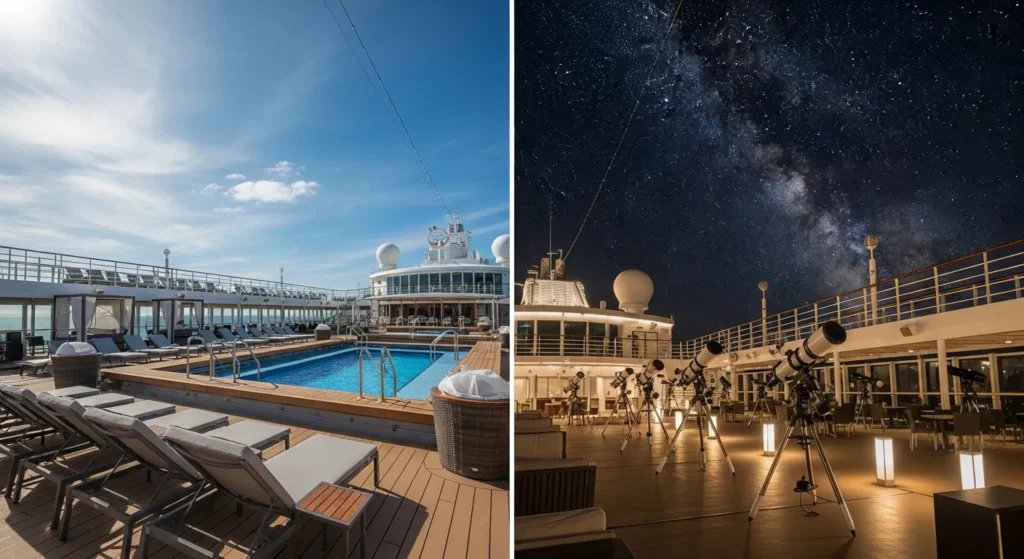
Several cruise lines and specialty tour operators run astronomy-focused voyages.
Princess Cruises “Discovery at Sea”
Partners with actual astronomers and astrophysicists who join select voyages. Features stargazing deck parties, telescope viewing sessions, and astronomy lectures. Routes include Caribbean, Alaska, and transatlantic crossings timed for celestial events.
Price range: $1,500-4,000 per person for 7-14 day cruises.
Celebrity Cruises Eclipse Programs
Offers dedicated solar eclipse cruises positioning ships in the path of totality. Past eclipse cruises to locations like Fiji and Antarctica sold out months ahead. Includes pre-eclipse education sessions, viewing equipment, and expert commentary during the event.
Price range: $3,000-8,000+ per person depending on cabin and route.
Holland America Line
Occasionally features astronomy programming with guest speakers. Less astronomy-focused than Princess but includes stargazing events on select itineraries.
Price range: $1,800-3,500 per person for typical voyages.
Specialty Astronomy Tour Operators
Companies like TravelQuest International and Astro Trails organize dedicated astronomy cruises on chartered ships. These attract serious amateur astronomers. Routes planned specifically around major astronomical events. Guest astronomers, specialized equipment, and focused programming throughout.
Price range: $4,000-12,000+ per person for expedition-style astronomy cruises.
What You Actually Get
Astro-cruise experiences vary but typically include several core elements.
Stargazing Sessions
Scheduled evening deck gatherings where ship lights dim for optimal viewing. Onboard astronomers point out constellations, planets, and deep sky objects. Ships provide telescopes and binoculars. Some supply laser pointers for constellation guides. Duration varies from 30-minute introductions to 2-3 hour intensive sessions.
Astronomy Lectures and Workshops
Daytime educational sessions covering topics like:
- Understanding star charts and celestial navigation
- Planetary science and current space missions
- Astrophotography basics
- History of astronomy and major discoveries
- Using telescope equipment effectively
Lectures range from beginner-friendly overviews to technical discussions for experienced observers.
Planetarium Shows
Some ships feature onboard planetarium domes. Digital projections simulate night skies, demonstrate celestial mechanics, and preview what you’ll observe that evening. Not available on all ships. Larger, newer vessels more likely to include this amenity.
Special Event Viewing
Cruises timed for eclipses, meteor showers, or planetary events position ships optimally for observation. Eclipse cruises plan entire routes around achieving best viewing position during totality. Backup positioning accounts for potential weather interference.
Equipment Access
High-quality telescopes set up on deck for public use. Staff astronomers help with focusing and locating objects. Some cruises allow bringing personal telescopes. Ship staff assists with setup and polar alignment.
Cost Breakdown
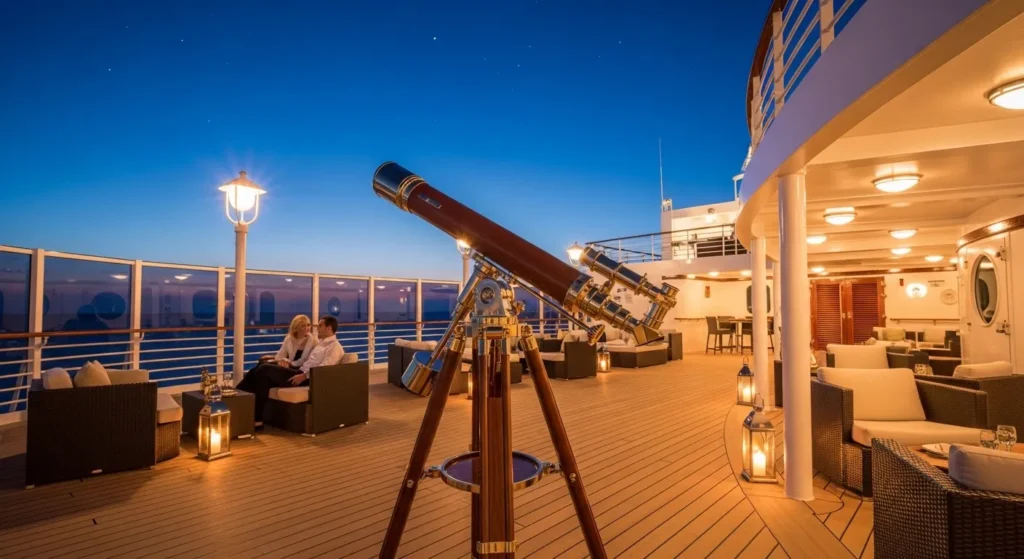
Astro-cruises cost more than standard cruises to same destinations.
Standard Astro-Cruise Pricing:
7-day Caribbean astronomy cruise:
- Interior cabin: $1,500-2,200 per person
- Oceanview: $1,800-2,800 per person
- Balcony: $2,400-3,800 per person
- Suite: $4,000-6,500 per person
Eclipse Cruise Pricing:
Dedicated eclipse voyages command premium rates:
- Interior cabin: $2,500-4,000 per person
- Oceanview: $3,200-5,500 per person
- Balcony: $4,500-7,500 per person
- Suite: $7,000-12,000+ per person
Additional Costs:
- Port fees and taxes: $150-400 per person
- Gratuities: $14-18 per person daily
- Specialty dining: $25-75 per meal
- Alcoholic beverages: $8-15 per drink
- Shore excursions: $50-200+ per activity
- Travel to departure port
- Pre/post cruise hotels if needed
What’s Included:
Most astronomy programming, telescope access, lectures, and basic stargazing sessions come included in cruise fare. Standard cruise inclusions apply: accommodations, main dining room meals, basic beverages, entertainment, pool/fitness facilities.
What Costs Extra:
Specialty restaurants, alcoholic drinks, shore excursions, spa services, photos, internet access, and gratuities.
Best Routes for Dark Skies
Not all cruise routes offer equally good astronomy conditions.
Caribbean Crossings
Sailing between islands provides stretches of open ocean far from light pollution. Best during new moon phases when moonlight doesn’t interfere. Weather generally cooperative outside hurricane season (June-November).
Alaska Inside Passage
Summer months offer nearly 24-hour daylight—terrible for stargazing. Shoulder seasons (May, September) provide darker skies but colder weather. Northern latitude enables viewing aurora borealis occasionally.
Transatlantic Crossings
Extended days at sea crossing the Atlantic provide multiple consecutive dark-sky nights. Mid-ocean positioning eliminates all artificial light. Spring and fall crossings offer better weather than winter routes.
Antarctica Expeditions
Expensive but provides darkest skies possible. Minimal light pollution and clear polar air. Summer season (November-March) offers nearly continuous daylight, limiting stargazing. Autumn/spring shoulder seasons better for astronomy despite harsher conditions.
Pacific Island Routes
Cruises to remote Pacific islands like Tahiti, Fiji, or Cook Islands pass through areas with exceptional darkness. Southern hemisphere routes enable viewing celestial objects invisible from northern latitudes.
Weather Reality Check
Ocean weather significantly impacts astronomy cruising success.
Cloud Cover Issues
Clouds block celestial viewing completely. Ships can’t outrun weather systems covering hundreds of miles. Caribbean routes average 30-50% cloud cover depending on season. Some nights offer perfect conditions, others complete obstruction. Eclipse cruises build contingency routing to chase clear skies when possible. No guarantees exist.
Ship Motion
Telescope viewing from moving ships proves challenging. Even gentle rocking makes focusing difficult for inexperienced users. Binocular viewing works better on ships than telescopes for beginners. Stabilized waters (inside passages, protected bays) offer better viewing than open ocean.
Light Pollution From Ship
Even with exterior lights dimmed, ships generate significant ambient light. Windows, navigation lights, and safety lighting never fully extinguish. Dark-adapted vision gets constantly disrupted by other passengers using phones or flashlights. Not comparable to truly remote land-based dark sky sites.
Worth It For First-Timers?
Depends entirely on your priorities and expectations.
Consider Astro-Cruising If:
You’ve never experienced truly dark skies before. The difference between suburban stargazing and mid-ocean viewing is dramatic. You want structured learning with expert guidance. Onboard astronomers provide context and education unavailable when stargazing alone.
You prefer comfort over hardcore astronomy. Sleeping in real beds, eating prepared meals, and having bathrooms beats camping in remote locations. You’re combining astronomy interest with general vacation. Partner or family members get standard cruise amenities while you focus on astronomy programming.
Budget allows $2,000-4,000+ per person. This isn’t budget travel.
Skip Astro-Cruising If:
You’re a serious amateur astronomer. Dedicated dark sky sites with your own equipment provide better observing conditions than ship decks. Budget is tight. You’ll get more pure astronomy experience from land-based star parties or dark sky park visits costing fraction of cruise prices.
You’re prone to seasickness. No amount of celestial beauty compensates for feeling ill. You expect space-travel experiences. This is ocean cruising with astronomy programming, not anything resembling actual space travel.
Flexibility matters more than comfort. Ships follow fixed schedules regardless of weather. Land-based observers can wait out clouds or relocate.
Alternatives to Consider
Several options deliver dark sky experiences without cruise ship costs.
Dark Sky Parks and Reserves
International Dark Sky Association certifies locations worldwide with exceptional night skies and minimal light pollution. Parks like Cherry Springs (Pennsylvania), Natural Bridges (Utah), or Tekapo (New Zealand) offer premium stargazing.
Costs: Camping $20-40 nightly, nearby lodging $80-200 nightly. Equipment rental available at some locations.
Astronomy Tour Companies
Specialized tour operators organize land-based astronomy trips to optimal locations for specific events. Eclipse tours, meteor shower expeditions, and aurora viewing trips provide expert guidance without maritime complications.
Costs: $1,500-5,000 per person depending on destination and duration. Usually cheaper than equivalent cruise.
Amateur Astronomy Clubs
Local astronomy clubs organize “star parties” at dark sky locations. Members bring telescopes and share viewing. Most clubs welcome beginners. Equipment use typically free or minimal cost.
Costs: Club membership $25-75 annually, travel to dark sky site, camping or accommodation.
DIY Dark Sky Road Trip
Rent a car and drive to dark sky locations yourself. Apps like Dark Sky Finder and Light Pollution Map identify optimal locations. Requires owning or renting equipment. More effort but maximum flexibility and lowest cost.
Costs: Transportation, accommodation, meals, equipment if needed.
Making Astro-Cruises Better
If you book an astro-cruise, maximize the experience with these strategies.
Choose New Moon Timing
Moonlight washes out faint celestial objects. Cruises during new moon phases offer darkest skies. Check lunar calendars when booking. Avoid full moon periods if astronomy is primary interest.
Book Eclipse Cruises Early
Dedicated eclipse cruises sell out 6-12 months ahead. Popular routes fill faster. Backup dates sometimes available if primary eclipse cruise sells out.
Bring Red Flashlight
Preserve dark adaptation with red-filtered flashlight. White light destroys night vision. Most cruise shops don’t stock these. Bring from home.
Download Astronomy Apps
Stargazing apps help identify what you’re observing. Download offline-capable versions before sailing. SkySafari, Star Walk, and Stellarium offer robust features.
Dress Warmly
Ocean nights get cold, especially at higher latitudes or during winter months. Bring layers, windbreaker, gloves, and warm hat even for tropical cruises.
Attend All Programming
Maximize included astronomy content. Lectures provide context making viewing sessions more meaningful. Ask questions during sessions. Astronomers appreciate engaged participants.
Consider Interior Cabin
If spending minimal time in cabin due to nighttime astronomy focus, save money with windowless interior room. Use savings for shore excursions or upgrades.
What First-Timers Should Know
Several realities about astro-cruising differ from expectations.
Viewing Time is Limited
Ships operate on schedules. Stargazing sessions last 1-3 hours typically. Can’t stay on deck all night in most cases. Ship activities and safety protocols create time constraints.
Crowds During Popular Events
Eclipse viewing or major meteor showers draw huge deck crowds. Telescope access becomes limited. Bring binoculars for independence from shared equipment.
Photography is Challenging
Astrophotography from moving ships produces disappointing results for beginners. Enjoy visual experience rather than trying to photograph everything.
Weather Determines Success
Clouds mean no viewing regardless of astronomical event happening above them. Accept that some planned observations might not occur.
Not a Learning Vacation
While educational, pace doesn’t allow developing deep expertise. View as introduction to astronomy rather than comprehensive course.
Making the Decision
For first-time space-lovers, astro-cruising works best when: You value convenience and comfort over optimization. Premium experience costs premium prices. You’re combining interests. Astronomy enthusiast traveling with non-enthusiast benefits from cruise format offering activities for both. You’ve never seen pristine dark skies. The revelation of genuine darkness justifies cost for many people.
Budget accommodates $2,500-5,000+ per person without financial stress.
You prefer guided experiences over independent exploration.
Skip it when:
Budget is primary concern. Better astronomy experiences exist for less money. You’re experienced amateur astronomer with own equipment. Land-based sites serve better. Seasickness is concern. No celestial event worth feeling ill. Flexibility matters. Weather contingencies work better on land.
Final Considerations
Astro-cruising delivers genuine value for specific audiences. Combining vacation relaxation with introduction to serious astronomy works for people wanting comfortable guided experiences.
For first-time space-lovers specifically, it depends on what “worth it” means to you. Educational value? Absolutely. Convenience? Yes. Best possible astronomy experience for the money? Probably not.
If cruise format appeals and budget allows, you’ll likely enjoy the experience. If astronomy passion runs deep and budget is limited, land-based alternatives deliver more pure astronomical value.
The “worth it” calculation is personal. No universal answer exists.
Ready to book or want to explore land-based alternatives first?
Frequently Asked Questions
Do I need my own telescope for an astro-cruise?
No. Ships provide telescopes for passenger use during stargazing sessions. Staff astronomers help with operation and locating objects. Some cruises allow bringing personal equipment but it’s optional, not required. Most first-timers benefit more from using provided equipment with expert guidance.
Can I see the same things from a cruise ship as from land?
Generally yes, but with limitations. Ship motion makes steady viewing more difficult than stable ground. Ambient ship lighting reduces dark adaptation compared to truly remote land sites. Weather flexibility is less on fixed cruise schedules. However, mid-ocean darkness surpasses most land locations near populated areas.
Are astro-cruises suitable for kids and families?
Depends on child’s age and interest level. Older children (10+) with genuine astronomy interest often enjoy the experience. Younger children may find evening sessions boring and nighttime schedules disruptive. Standard cruise activities keep non-astronomy family members occupied. Consider child’s attention span and genuine interest before booking.
What if weather ruins the main astronomical event?
Cruise lines can’t control weather. Eclipse cruises sometimes reposition ships to chase clear skies but no guarantees exist. Most cruises offer no refunds for cloudy conditions. Travel insurance typically doesn’t cover “disappointment” from weather. This risk is inherent to astronomy cruising. Accept possibility of cloud interference when booking.
How dark does it actually get on a ship at night?
Darker than cities but not as dark as remote land locations. Ships dim exterior lights during stargazing but never achieve complete darkness due to safety requirements, navigation lights, and passenger activity. Expect significantly better than suburban stargazing but not matching truly remote dark sky preserves. Dark adaptation gets frequently disrupted.
Do I need astronomy knowledge before booking?
Absolutely not. Astro-cruises welcome complete beginners. Onboard programming starts with basics like constellation identification before progressing to more complex topics. Astronomers adjust presentations for mixed-experience audiences. Beginner-friendly approach is actually one of astro-cruising’s main appeals. Prior knowledge enhances experience but isn’t required.
Can I get a refund if I get seasick and miss the astronomy?
Standard cruise cancellation and refund policies apply. Seasickness doesn’t typically qualify for refunds once voyage begins. Consider booking with travel insurance covering medical issues if seasickness is concern. Some passengers find seasickness medication effective. Interior cabins and midship locations reduce motion sensation compared to forward or aft cabins.