
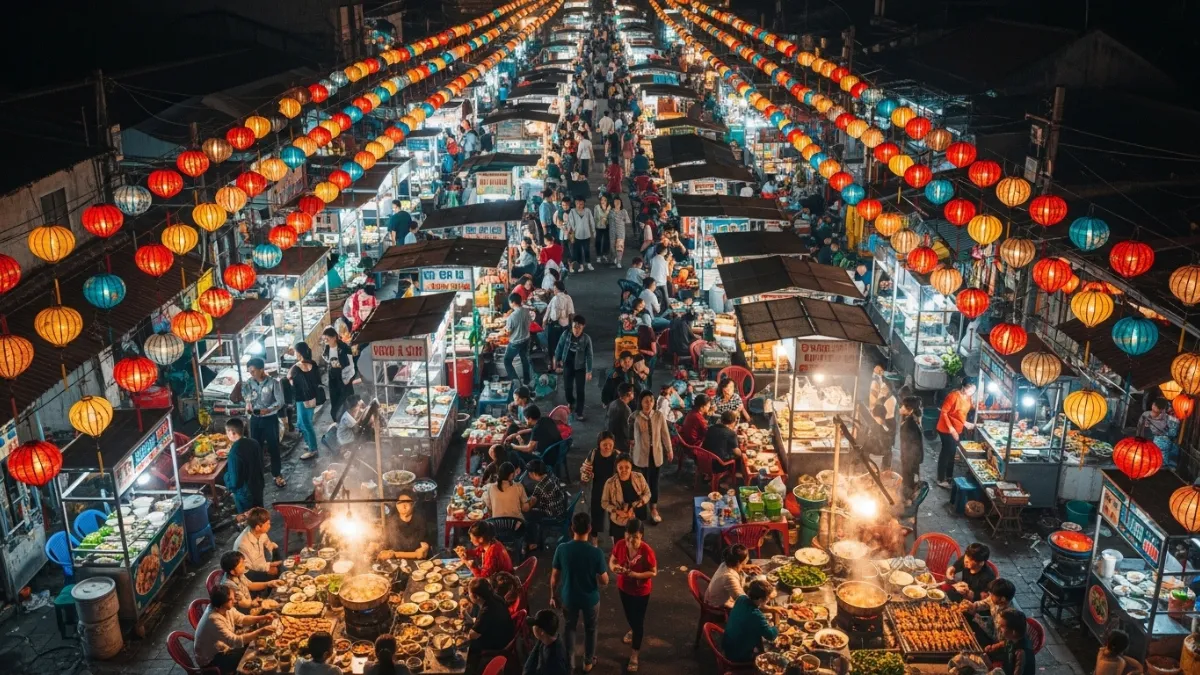
Vietnam’s streets are full of amazing food, and the first question every traveler asks is whether it is safe to eat. The answer is yes — and here is everything you need to know before your first bite. From foods to avoid and safe fruit choices to market picks and food poisoning prevention, this guide covers it all in one place.
Vietnam Street Food Safe to Eat — Simple Ways to Choose the Best Stall
Before anything else, learn this one golden rule: eat where locals eat.
Vietnamese people eat street food every single day of their lives. They know exactly which stalls are trustworthy. A cart surrounded by office workers, school kids, and elderly locals at lunchtime is your strongest safety signal — stronger than any review or recommendation.
Three quick checks before you sit down:
- Food is being prepared and cooked right in front of your eyes
- The crowd is mostly locals, not tourists
- Bowls and utensils look freshly washed
If everything looks good — sit down and enjoy your meal
Vietnam Street Food Hygiene — What Actually Keeps You Safe
Vietnam’s street food safety comes down to one thing: high turnover equals fresh ingredients. A stall selling 200 bowls every morning will always have fresher food than a half-empty restaurant serving 20 customers all day.
Watch for these green flags — food stored in covered containers, separate utensils for raw and cooked items, and a cooking surface that stays actively hot throughout service.
Red flags to walk away from: food sitting at room temperature for hours, greasy reused serving water, and stalls with zero customers.
Foods You Should Avoid in Vietnam — A Straight Honest Breakdown
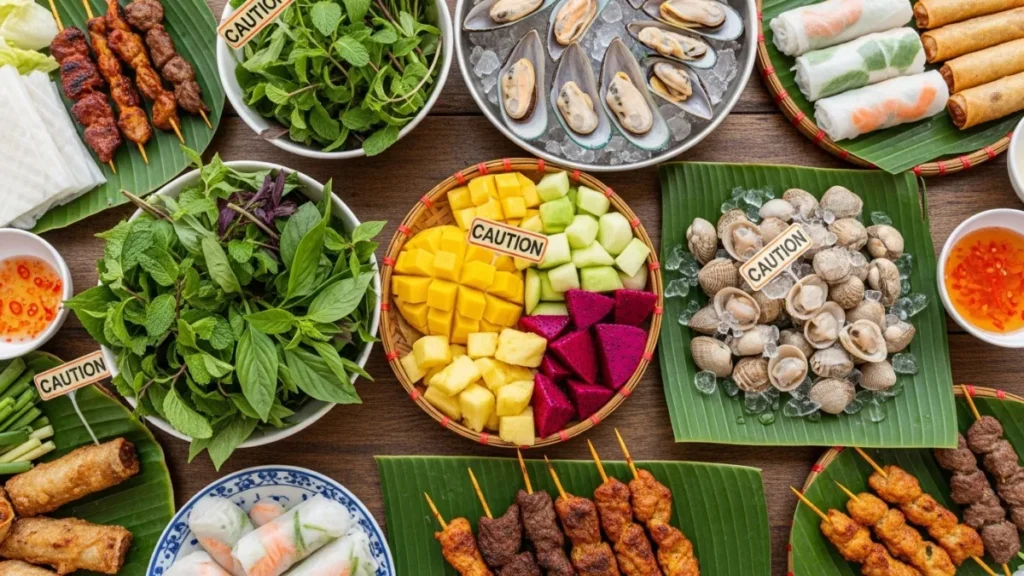
Not every dish carries equal risk. These are the ones to approach carefully:
- Tiet Canh (raw blood pudding) — highest risk dish in Vietnam, avoid entirely
- Raw leafy salads — often washed with tap water, skip unless you are certain otherwise
- Inland shellfish and seafood — far from the coast means far from fresh
- Tap water ice — only trust tube-shaped commercial ice in your drinks
- Undercooked or pink-looking meat — never worth the risk
Safe bets every time? Pho, banh mi, freshly grilled meat, and deep-fried dishes are your safest choices. These are almost always perfectly safe.
Read More:Best Time to Visit Thailand Avoiding Crowds 2026: Insider’s Guide
Can You Safely Eat Fruit in Vietnam?
Yes — if you peel it yourself. Bananas, dragon fruit, mangosteen, rambutan, and lychees are completely safe. The thick skin acts as a natural protective barrier that bacteria simply cannot get through.
Pre-cut watermelon, mango, or papaya displayed on market carts? Be more careful. Buy only pieces cut very recently in front of you. For thin-skinned fruits like grapes or strawberries, always rinse with bottled water before eating — never tap water.
Vietnam Street Food Markets — Top Spots Worth Visiting
These markets are known for serving some of the most reliable and genuine street food you will find anywhere in Vietnam:
- Ben Thanh Market, Ho Chi Minh City — well-organized, busy, great for first-timers
- Dong Xuan Market, Hanoi — perfect for banh cuon and bun oc at breakfast
- Hoi An Night Market — try cao lau noodles and white rose dumplings unique to this region
Always arrive early. Morning visits mean the freshest food and the highest turnover — your two best friends for staying safe.
Street Food in Vietnam Price — What to Expect
Vietnam street food is remarkably affordable. A bowl of pho costs around 30,000–60,000 VND, banh mi runs between 15,000–35,000 VND, and fresh spring rolls are roughly 15,000–30,000 VND per roll.
One pricing insight worth remembering: the cheapest stall on a quiet alley is not always the safest choice. A slightly pricier cart packed with local workers almost always offers better quality and better hygiene.
How to Avoid Food Poisoning in Vietnam — Simple Habits That Work
These daily habits are what separate travelers who stay healthy from those who spend days recovering in their hotel:
- Drink only bottled or purified water — tap water is not safe anywhere in Vietnam
- Use hand sanitizer with 60% alcohol before every single meal
- Give your stomach 48 hours to adjust before trying adventurous dishes
- Pack oral rehydration salts and loperamide before you travel
- Consider a Hepatitis A vaccination at least four weeks before departure
If symptoms hit despite your precautions — start rehydrating immediately. Fever above 38.5°C, blood in stool, or vomiting lasting more than 24 hours means you need a clinic, not just rest. International medical facilities in Hanoi and Ho Chi Minh City are well-equipped for travelers.
Vietnam’s street food is truly one of the most rewarding eating experiences you will ever have. A little awareness and some basic daily habits are all you need. The food is out there — go find it.