


Your friend who visited Thailand twice thinks they know everything. They don’t. Not really.
Their tips worked great for them. Two years ago. Different season. Different budget. Things shift here constantly. What helped them might actually create problems for you now.
Nobody mentions the small confusing stuff until you’re already dealing with it. Standing in the wrong queue. Overpaying for something simple. Wondering why your bathroom floor’s soaking wet.

Here’s what genuinely matters.
This Thailand travel advice for first-time visitors skips the generic temple lists everyone copies. It tackles the practical gaps that catch people unprepared. Bathroom layouts that make no sense. Which phone company to pick. How taxi stands actually work. Why ordering “not spicy” still burns.
Real situations that affect your first day, not just sightseeing highlights.
Your initial Southeast Asia experience works better with actual preparation instead of expensive surprises.
The Bangkok Airport Thing Nobody Explains
Bangkok operates two separate airports. Suvarnabhumi takes most international arrivals. Don Mueang handles budget carriers primarily.
These airports sit an hour apart. Completely different areas of the city.
Booking connecting flights? Verify both use the same airport. Missed connections from being at the wrong terminal happen surprisingly often.
The Airport Rail Link from Suvarnabhumi costs 45 baht ($1.25) and reaches central Bangkok in 30 minutes. Dead simple. Signs are clear. English everywhere.
Taxis from the airport work differently though.
Don’t accept rides from random people in arrivals. Ever. Walk to the official taxi stand on the ground floor. Take a ticket. Wait for your number. The driver uses the meter plus a 50 baht airport fee.
Should cost 250-400 baht depending on traffic and destination.
Anyone quoting flat rates before seeing the meter? Walk away.
Your Phone Situation (Sort This Day One)
Roaming fees from home carriers hurt badly.
Purchase a Thai SIM immediately after clearing customs. Right there in the airport terminal before leaving. AIS and True Move have counters directly in the arrivals hall.
Tourist data packages offering 30-50GB run 300-500 baht ($8-14). Covers most people’s entire visit easily.
Staff speak English. Installation takes two minutes. They’ll swap your SIM and test it works.
Suddenly Google Maps functions. Grab works. Translation apps work. You’re not wandering lost trying to find WiFi.
Your home SIM card goes in your bag. Don’t lose it obviously.
The Shower Situation (Yes, Really)
Plenty of Thai bathrooms skip the separated shower setup. Water hits everything during showers. Floor, toilet area, sink counter. All of it.
Floor drains handle the water eventually.
First-timers find this confusing every single time without fail.
Hang your towel outside the bathroom. Put your clean clothes somewhere dry before showering. Accept that wet bathroom floors are normal here.
Some places have Western-style bathrooms with shower enclosures. But plenty don’t. Even nice hotels sometimes follow Thai bathroom design.
Not better or worse. Just different.
Transportation That Actually Makes Sense
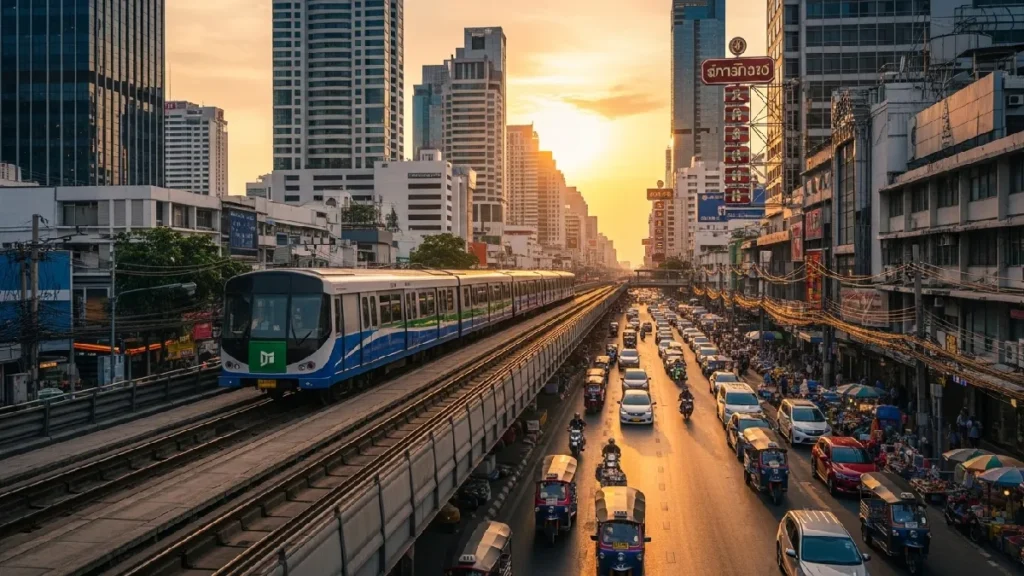
Bangkok’s elevated train (BTS) and underground system (MRT) work brilliantly. Air-conditioned cars, reliable timing, affordable prices, clean stations.
Individual trips run 16-59 baht based on how far you travel. Station machines sell tickets but only take coins and smaller bills.
Keeps you floating above Bangkok’s infamous gridlock traffic.
The system doesn’t cover everywhere though. River taxis fill some gaps. Grab (like Uber) fills the rest.
About tuk-tuks:
Tourists love them. Locals rarely use them.
They’re fun for short rides but negotiate the price BEFORE getting in. Drivers quote crazy high prices to tourists. 100-150 baht for a 5-minute ride is reasonable. 500 baht is ridiculous.
Grab costs less and the price is set before you book. No surprises.
Songthaews (covered pickup trucks) work like buses in smaller cities. Wave one down, tell the driver your destination, they nod if they’re going that way. Rides cost 10-30 baht. Pay when you get off.
Money Stuff They Don’t Mention
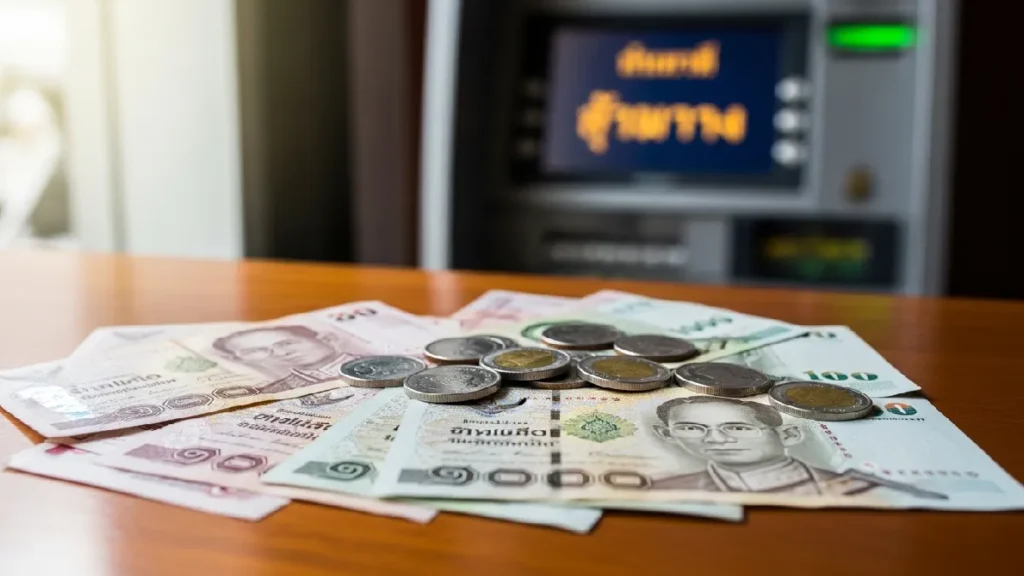
When you withdraw cash in Thailand, ATMs typically take an extra 220 baht, about six to seven dollars.
Withdraw larger amounts less frequently to minimize fees. Most ATMs max out at 20,000-30,000 baht per transaction.
Use ATMs attached to banks inside malls for security. Random street ATMs sometimes have skimmers.
Exchange rates at official money changers (like Superrich) beat airport rates significantly. Bring crisp, newer US dollars or Euros if exchanging cash. Torn or old bills get rejected or receive worse rates.
Credit cards work at hotels and tourist restaurants. Everywhere else expects cash.
Street food, tuk-tuks, markets, small shops, temples—cash only.
Keep small bills handy. Breaking a 1,000 baht note for a 40 baht purchase annoys vendors.
The Spice Level Situation
“Not spicy” in Thailand still has some heat.
Thai people grow up eating seriously spicy food. Their baseline differs from Western baselines dramatically.
Saying “not spicy” or “mai pet” might get you medium spice by their standards. Which might still burn your mouth.
Better approach: “Farang spicy” (foreigner spicy) or “pet nit noi” (just a little spicy).
Even then, be prepared. Thai food has layers of flavor beyond just heat. Sour, sweet, salty, bitter all combine.
If something’s too spicy, plain rice helps. Water makes it worse. So does beer actually.
Street Food Isn’t Scary
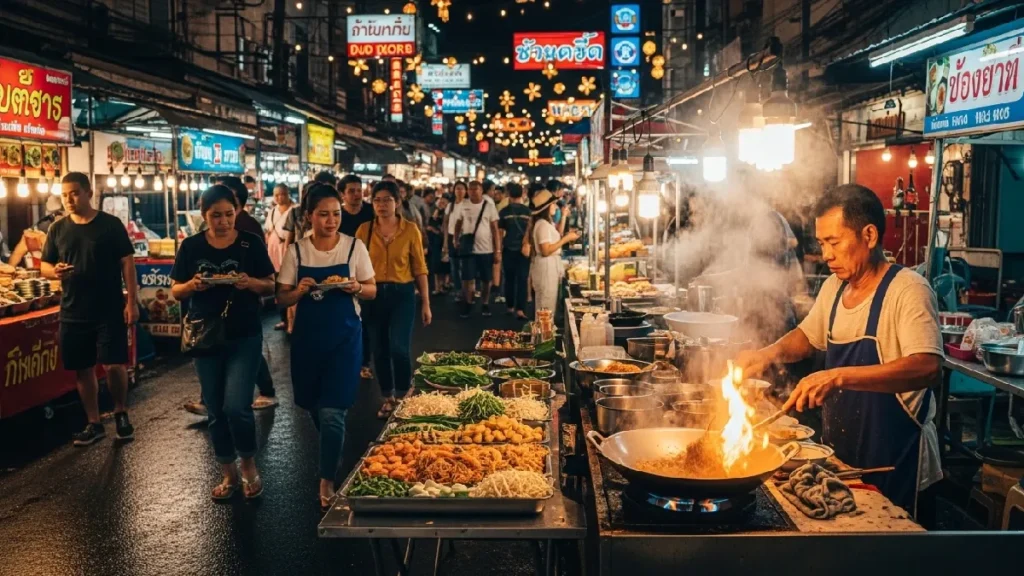
Hygiene standards differ from Western countries but busy street stalls are generally safe.
Watch where locals eat. Busy places with high turnover mean fresh food cooked frequently. Empty stalls with food sitting out? Skip those.
Vendors cooking food fresh in front of you are your safest bet. Deep frying kills most bacteria.
Avoid cut fruit sitting out in heat for hours. Fresh fruit cut to order is fine.
Bottled water only. Always. Thai tap water isn’t safe for foreign stomachs even if locals drink it sometimes.
Ice is usually fine at restaurants and food stalls. They buy it from factories that use purified water. Street drinks with sketchy-looking ice? Maybe skip it.
Temple Etiquette (The Important Bits)
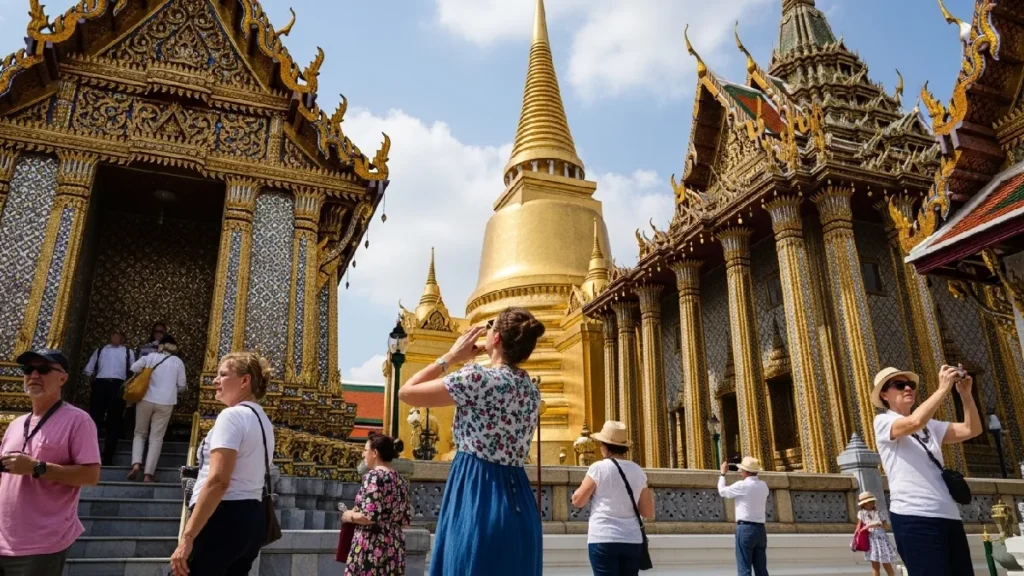
Shoulders and knees must be covered at temples. Tank tops and shorts get you denied entry.
Some temples rent sarongs if you forget. Others just turn you away.
Remove shoes before entering temple buildings. Follow what others do if you’re unsure.
Don’t point your feet at Buddha images. Feet are considered the lowest, dirtiest part of the body in Thai culture. Sit with them tucked under you or to the side.
Don’t touch monks if you’re female. Don’t hand things directly to them. Place items down so they can pick them up.
Photography is usually allowed but not during prayers or ceremonies. Use common sense and respect.
Bargaining at Markets
Fixed prices exist at malls and convenience stores. Markets expect negotiation.
Start at 50-60% of the asking price. Negotiate up from there. Smile. Keep it friendly.
Walking away often brings prices down fast. If they let you leave, your offer was genuinely too low.
Don’t negotiate aggressively over small amounts. That 20 baht difference you’re fighting over is less than $1. Not worth the energy or bad vibes.
Markets get cheaper the further you go from main tourist areas. Chatuchak Weekend Market in Bangkok has better prices than night markets in Seminyak.
The Squat Toilet Reality
Western toilets are common in hotels and tourist areas. But squat toilets still exist in some places.
Public restrooms, bus stations, smaller restaurants might have them.
There’s usually toilet paper or a spray hose. The hose is normal here—many Thais prefer it to paper.
Squat toilets aren’t dirty or wrong. Just different. If you’ve never used one, YouTube has tutorials. Not joking.
Islands and Beaches (Timing Matters)
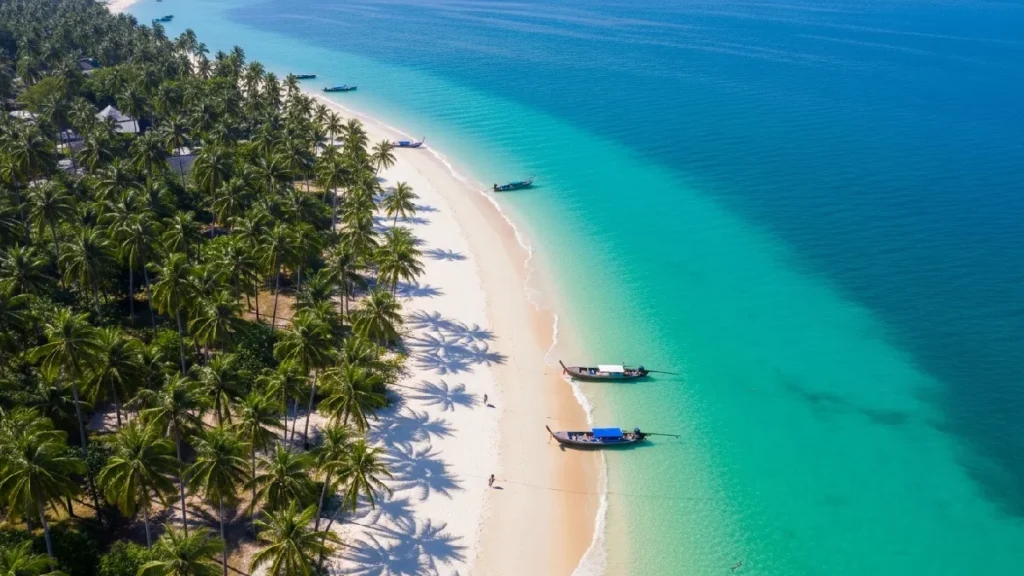
Thailand has islands on both coasts. They have opposite weather patterns.
Andaman Sea (West): Phuket, Krabi, Phi Phi Islands
- Dry season: November-April
- Rainy season: May-October
Gulf of Thailand (East): Koh Samui, Koh Phangan, Koh Tao
- Dry season: December-February, June-August
- Rainy season: September-November
Going to the wrong coast at the wrong time means rain, rough seas, closed businesses.
Check weather patterns for your specific destination and travel dates.
Massage Culture (Do This Right)
Thai massage is incredible and cheap. 200-300 baht ($6-9) for an hour is standard.
It’s not gentle. Traditional Thai massage involves stretching, pressure points, occasionally walking on your back.
Speak up if something hurts. They’ll adjust pressure.
You can tip in Thailand if you want to, but there’s no strong pressure like in the US. 50-100 baht tip is generous and well-received.
Avoid places with suggestive signs or located in red light districts unless you’re specifically seeking that. Legitimate massage shops are everywhere.
The 7-Eleven Obsession Makes Sense
7-Eleven stores are everywhere in Thailand. Sometimes three on the same block.
They’re cheap, clean, air-conditioned, and incredibly useful for travelers.
Bottled water, snacks, toiletries, SIM cards, coffee, even basic meals. Open 24 hours. Prices clearly marked. No haggling.
You’ll find yourself going there daily. Locals do too.
What Expensive Means Here
Western food costs almost as much as it does at home. That burger and fries? Probably 250-400 baht ($7-11).
Thai food costs a fraction. Pad thai from a street vendor runs 40-60 baht. Restaurant version costs 80-120 baht.
You can eat three Thai meals or one Western meal for the same price.
Beach clubs and rooftop bars in tourist areas charge Western prices. That cocktail costs 300-500 baht ($8-14).
Street beer costs 50-70 baht. 7-Eleven beer costs even less.
Choose where you spend. Mix cheap local experiences with occasional splurges.
Seasons Nobody Warns You About
Hot season (March-May) is brutally hot. 95-105°F regularly. Humidity makes it feel worse.
Rainy season (June-October) doesn’t mean constant rain. Usually afternoon showers for an hour or two.
Cool season (November-February) is peak tourist time. Best weather, highest prices, biggest crowds.
April sees Songkran (Thai New Year) water festival. Fun but chaotic. Everything shuts down for 3-5 days. Hotels and transport book up months ahead.
Scams That Still Work

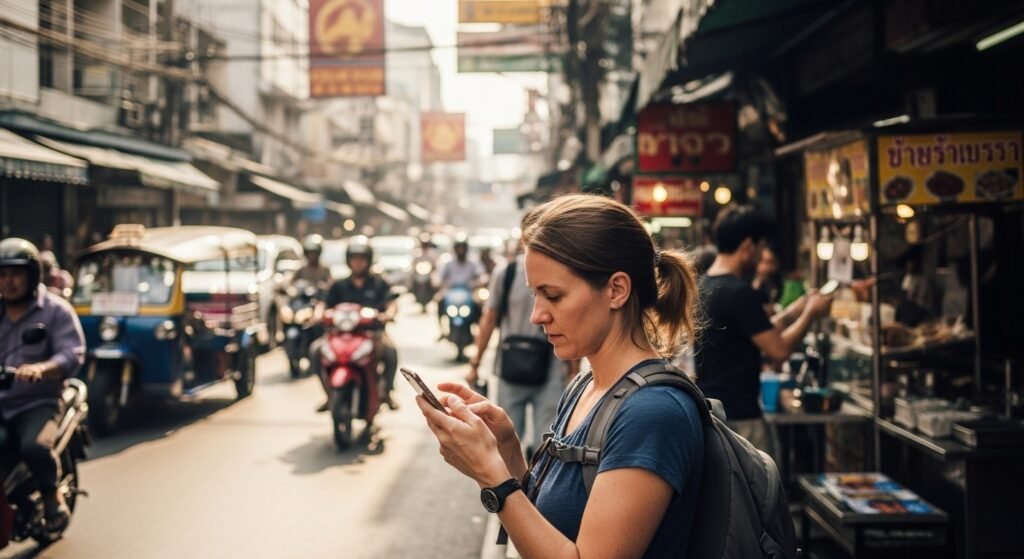
Tuk-tuk driver says temple is closed: Not true. They want to take you shopping for commissions. Temples rarely close during daylight hours.
Gem/tailor scam: Driver or friendly local suggests a great deal on gems or custom suits. Prices are inflated. Quality is questionable. Walk away.
Jet ski rental damage: Operators claim you damaged the jet ski. Demand hundreds of dollars. Avoid jet ski rentals or take extensive photos/video before riding.
Overcharging at bars: Bill comes way higher than menu prices. Always check bills carefully. Avoid bars with aggressive touts outside.
Taxi meter “broken”: Meter works fine. They want a flat rate to overcharge you. Insist on meter or get a different taxi.
Language Barriers (Smaller Than You Think)
Tourist areas have tons of English speakers. Hotels, restaurants, tour operators all manage English well enough.
Learning a few Thai phrases helps though:
- Sawadee krap/ka (hello)
- Kop khun krap/ka (thank you)
- Mai pet (not spicy)
- Aroi (delicious)
- Tao rai (how much?)
Thai people appreciate attempts to speak their language. Even badly.
Google Translate works well for restaurant menus and basic conversations. Download Thai for offline use.
Pointing, smiling, and simple gestures solve most communication issues.
What to Pack (The Honest Version)
Light, loose clothing for tropical heat. Tank tops and shorts for casual time. Long pants and covered shoulders for temples.
Good walking sandals matter more than you think. Flip-flops work but proper sandals with support are better.
Small backpack for day trips beats carrying a purse or tote.
Sunscreen (reef-safe if visiting islands). Thai sun hits different.
Mosquito repellent with DEET. Dengue fever exists in Thailand.
Basic first-aid stuff and any prescription meds from home. Pharmacies are good here but finding exact brands can be tricky.
Power adapter (Type A, B, C, or F plugs). Most hotels have USB charging ports but bring an adapter to be safe.
Leave fancy jewelry and expensive watches at home. No need for them and they attract attention.
Final Reality Check
Thailand rewards travelers who stay flexible and keep expectations realistic.
Not everything will go perfectly. You’ll get lost. Communication will fail sometimes. Food might disagree with you once or twice. Traffic will frustrate you.
That’s normal. That’s travel.
The incredible moments—watching sunset from a temple, eating amazing food for $2, chatting with friendly locals, exploring islands—massively outweigh the annoyances.
This Thailand travel advice for first-time visitors gives you the practical foundation. The rest comes from actually going and experiencing it yourself.
Start planning yet?
Frequently Asked Questions
Is Thailand safe for first-time solo travelers?
Generally very safe. Petty theft happens in tourist areas so watch belongings. Violent crime against tourists is rare. Solo female travelers visit Thailand constantly without issues. Use normal travel precautions—avoid walking alone in isolated areas late at night, watch your drinks, trust your instincts.
How much money should I budget per day in Thailand?
Budget travelers manage on $30-40 daily (hostels, street food, local transport). Mid-range travelers spend $60-100 daily (private rooms, mix of restaurants, occasional tours). Luxury travelers easily spend $150+ daily. Thailand adapts to different budgets well.
Do I need vaccinations to visit Thailand?
No mandatory vaccines required for most travelers. Hepatitis A and Typhoid are recommended. Japanese Encephalitis if visiting rural areas long-term. Malaria isn’t a concern in major tourist destinations. Check current health advisories before traveling as requirements change.
Can I drink tap water in Thailand?
No. Stick to bottled water always, even for brushing teeth. Ice at restaurants and established food stalls is usually safe—made from purified water. Sketchy street drinks with questionable ice? Skip it. Stomach issues from water are common for first-timers.
What’s the best area to stay in Bangkok for first-timers?
Sukhumvit area offers good balance—near BTS Skytrain, tons of restaurants, night markets, shopping. Silom works well too—central location, close to river taxis. Avoid Khao San Road unless you want intense backpacker party scene. Staying near BTS/MRT stations makes life much easier.
How far in advance should I book accommodation?
One week ahead works for most times of year. Book 2-3 weeks ahead during peak season (December-February). Book months ahead for Songkran (mid-April) or major holidays. Budget accommodations fill faster than mid-range hotels. Booking.com and Agoda dominate in Thailand.